Is your safety process too complicated?
Matthew Galloway 11 min readWhat happens when safety becomes too complicated? HSEQ executive leader Matthew Galloway delves into safety and compliance standards, challenges that face safety leaders, and WHS technology in this Altora guest blog.

When safety becomes too complicated
WHS has an image problem, and the problem is largely driven through our industry developing, implementing, and maintaining cumbersome management systems. WHS systems can have several issues – for example, not being integrated into operational management systems, overly complicated, poorly implemented, not fit for purpose and more.
A WHS system with these issues brings business risk – in other words a system that should be designed to reduce human risk can actually create or increase business risk if not done properly. This manifests itself through things like avoidable costs, shortcuts, lack of engagement and trust in the businesses’ commitment to safety.
The hidden costs of complexity
There can be many safety issues that go unnoticed which then have a knock-on effect and cause other issues.
For example, a vehicle pre-start had over 90 items on it, required two people and took over 20 minutes to complete. The pre-start was the right risk management tool but was not integrated into the business properly. Operational planning (e.g. time vehicle required at a site) and cost of labour (20 minutes of non-revenue generating work).
I worked somewhere were this was the case and so employees came in before shift starts to do their pre-start (unpaid). Whilst admirable, this created a fatigue exposure (which flows into the working day), an out of hours injury and workers compensation exposure (an unnecessary risk exposure), bred resentment and enabled complacency.
The knock-on effects:
- Incidents where a pre-start was completed (tick and flick), but clearly not to the required standard.
- Maintenance issues occurring during the day that should have been identified on the pre-start and could have been repaired prior to leaving the depot.
- Customer complaints about vehicles arriving on site without pre-starts done.
- Customer complaints about vehicles arriving late to site because pre-starts were done.
- Employee complaints about not getting paid properly (because diligent employees came in early and did their pre-start unpaid).
All from one poorly designed and implemented component of the safety management system that impacted 200 operational staff on a daily basis. The net result from system activities like this is increased costs (maintenance, incident response, contract/sales management, union interactions) stemming from a complex, ineffective and inefficient prestart system.
Compliance isn’t the same as safety
In the above example, completing the pre-starts demonstrated compliance with WHS obligations both legal and for the company’s management system. However, the pre-starts did little to nothing to benefit safety, and arguably eroded trust in the company’s commitment to safety. Employees know what non-value add safety work is, they saw the pre-start for what it was – paper risk management dressed up as compliance and safety.
Compliance and safety go hand in hand, compliance underpins safety, but it doesn’t replace it – too many organisations get this wrong.
An example that many readers will understand is the use of Safe Work Method Statements (SWMS). The SWMS meet a legislative compliance requirement, but they will only add to safety if developed and used properly. Too often those engaging contractors focus on SWMS for compliance purposes of the whole engagement and scope of work (hence 15-40+ page SWMS), instead of evaluating if the SWMS addresses hazards, controls and responsibilities for the identified High-Risk Work (which is what the regulator looks at).
Fundamentally though, safety is practical – it’s a voice, a warning sign, a checklist, a barricade, training, teamwork. Being compliant means meeting your legal obligations and your internal company requirements, but note that neither of these guarantee safety – they are the starting point. So, if your safety results don’t match your compliance results, you have a disconnect that needs investigating.

Put the frontline worker at the centre
A common term used in other business disciplines is User Experience, and it refers to the overall experience someone has when interacting with a product, system or service. This concept needs to be front of mind when designing a WHS system – how will it work for the end user. I go one step further than how will it work, to how will it add value (or minimise pain) to the end user.
Going back to prestarts – if a prestart identifies a defect, but the process is for the worker to fill in another form, that is poor user experience (due to being inefficient) in my view. However, if during the prestart process the defect is work flowed to the maintenance team, the prestart had added business value. If the prestart identifies a critical defect (which still workflows to the maintenance tam), and there is a link to geofencing or ignition control preventing the vehicle from leaving the depot, then there is hardwired safety value along with long term business value. This puts the frontline worker at the centre through protecting their decision making, their physical safety, and protects the asset they rely on every day.
User experience is an overlooked weakness in many WHS systems. Layers and layers of risk control appear to add value – but if they adversely impact engagement, the result is hidden shortcuts, reduced engagement, paper risk management not matching reality of events etc, all due to not properly considering the end user, what, how and why they use the system.
Technology: Simplifier or another layer of complexity?
Technology particularly with regards to WHS management and reporting systems, vehicle monitoring, and video surveillance, has been around for decades. The systems are full of potential but often do not provide the outcome expected. The most common issues are poor selection, design and implementation.
As previously stated, if user experience is not considered, then the potential business value will not be realised. I have worked in organisations where the reporting system was designed by IT, where the system was managed by IT without WHS, where the system was turned off, where the wrong system was selected, and where the system was poorly configured. Needless to say, the utilisation and effectiveness of the systems in those circumstances was poor.
Key fixes that enable technology to be used to its full extent (and all things I have done) include – using the HSE department at the design phase, using HSRs during the user acceptance testing/pilot stage, implementing QR Code links, implementing notification workflows, removing unnecessary fields, and upgrading old versions. The key aspect for each of these was for the product to add value.
One of the more significant projects I was involved in required most of the above. In that instance the reporting system had been turned off, and the business reverted to manual spreadsheets and incident reporting forms. This duplicated work (once onto the form, once into a spreadsheet), meant all escalation had to be manual (see the form, ensure information makes sense, then inform operations managers and executive team), and created regulatory risk (a lack of timeliness for incident reports getting to HSE, and a subsequent evaluation of regulator reporting requirements – which would then be late!).
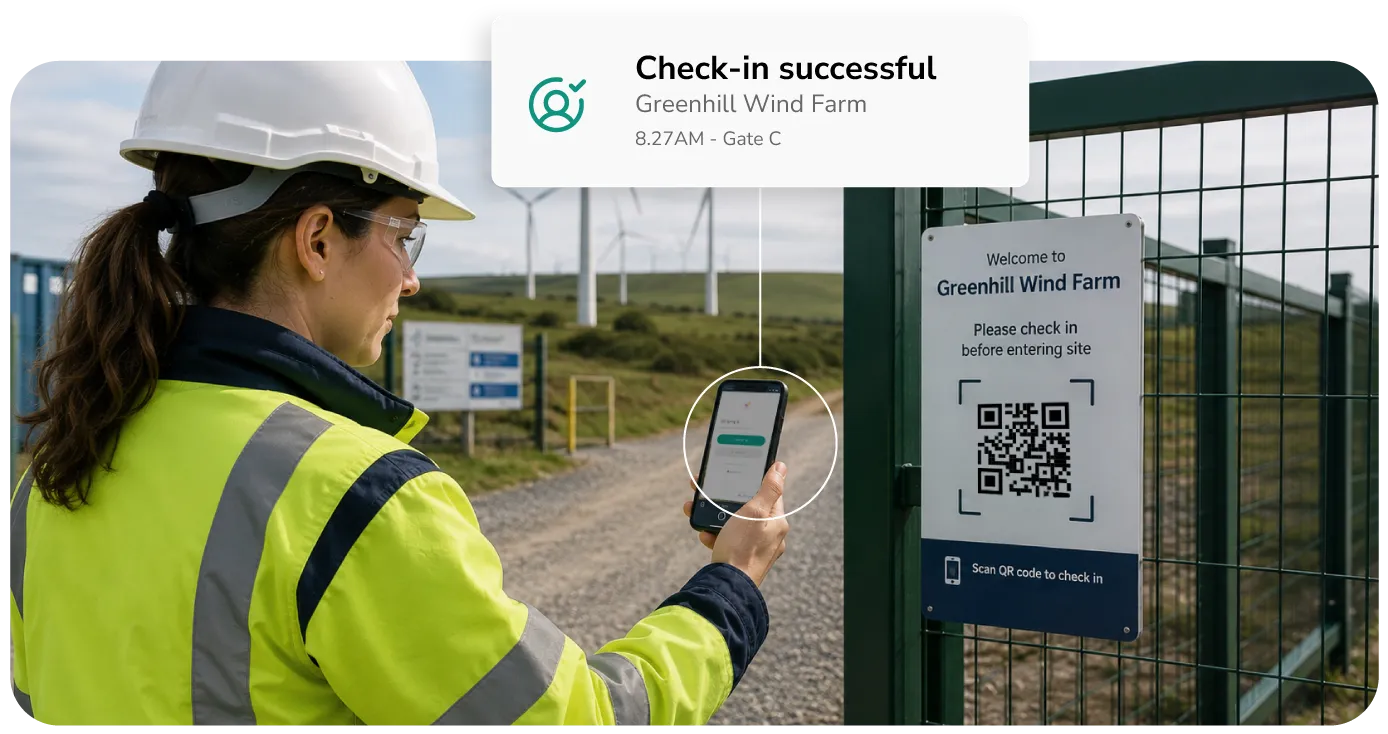
To fix the system, we upgraded the reporting system that had been turned off and turned it back on. As part of that we chose to customise the system, removing unnecessary fields (if you will never report or do decision making based on a field, it’s an unnecessary field). As we went through user acceptance testing, we informed HSRs, demonstrated and tested with them before piloting with a small business unit in the organisation. As part of this we put the app on all work vehicle tablets and placed QR codes in staff rooms and work vehicles, enabling employees to get to the right forms easily.
Note that almost none of the effectiveness could have been done without technology – notifications, workflows and accessibility are tangible aspects of the WHS duty of care requirements.
What does a simpler WHS system look like?
A simpler WHS system is not just introducing technology; it’s a number of integrated factors.
Firstly, I would remove noise such as procedures, forms, checklists that either don’t work or are not used. At one company I did an exercise with my team where we identified over 50 redundant documents to remove from the WHS Management system – a huge amount of unnecessary paperwork!
Secondly look at your reporting. Remove fields (paper or digital) and classifications that you will never use. For example, if you don’t report Restricted Work Injuries as a classification then just report MTIs and LTIs – the management is very similar, and the classification adds no value. The same may be the case for Hazard categories or Mechanism of Injury – a 200-person business with 3 injuries a year will not use those data points (but a 200-person business with 70 injuries might).
Thirdly tune your communications. If you are using a digital system, setup notifications, workflows and escalation at the right cadence. Too many notifications and WHS loses value (it’s now digital noise), conversely if notifications don’t go to the right people, then timely decision making is adversely impacted, and critical people can be out of the loop. When doing consultation be as transparent as possible – the same information to the HSE Committee as to Operations Managers and to Executives and the Board. This streamlines communication, consistent messaging, shared understanding, creating and enabling trust in an organisation.
Lastly – validate your efforts. Check with operators, drivers, end users if the system is working for them, and go from there.
The role of safety leaders
If you are in a business and it appears to have a safety culture problem, I guarantee part of that problem will relate to the WHS system. If the system is cumbersome, people won’t use it or will tick and flick it. If the system is buggy, people won’t use it. If the system has 45 fields when only 15 are needed, people won’t use it. If there’s excessive data to dissect, but the data isn’t used, then your system is bloated. Our role as safety leaders is to tune the WHS system so that it meets the needs of the end user, in the process enabling compliance and a safe workplace.
The power of a well-tuned WHS system
A well-tuned WHS system is like a well-maintained vehicle. It enables your teams to work safely and efficiently, balancing business and personal risk whilst protecting both. Technology is an integral part of modern WHS management systems, and using a well designed and implemented system will reduce pain points, enable good decision making and add value well beyond its cost. Key things to ensure the system is setup for success, eliminate noise, only report on useful data points, communicate early and well, validate on an ongoing basis. Finally, avoid putting band aids on the system (another field, data point, checklist, inspection, form or procedure), as this takes you back to where you started from!
Altora – driving efficient WHS outcomes through digital onboarding
Established in 2010, Altora is an induction and compliance software company with three intuitive onboarding products that work together to drive efficiency, safety and compliance across your WHS induction processes.
Online Induction System
Streamline employee and contractor onboarding. Induct online, track licences and records, create compliance pathways, and access insights with powerful reporting tools.
FeaturesPricingCheck-in System
Staff sign-in software for employee, contractor and visitor management. Manage multi-site compliance. Check-in/check-out using a QR code or on-site kiosk.
Contractor Management System
Prequalify contractors, set requirements, store key documents, track performance, and manage compliance with Altora's secure and centralised contractor management software.
Matthew Galloway – HSEQ executive leader
Matthew Galloway is an accomplished executive leader with over 15 years of experience driving transformational change in health, safety, environment, quality (HSEQ), and people functions across sectors including infrastructure, manufacturing, logistics, rail, and government.
Recognised for his values-based leadership and ability to foster strong workplace cultures, Matthew has consistently delivered measurable improvements in safety performance, risk mitigation, and organisational capability. He brings deep expertise in integrated management systems, cultural realignment, and regulatory compliance, and is known for his ability to align strategy with execution at both board and operational levels.
In previous executive roles, including General Manager HSEQ at Rangedale Group and MaxiTRANS, and General Manager of Safety and People at SeaRoad, Matthew led high-performing teams, reduced injury frequency rates significantly, modernised systems using digital platforms and delivered multi-state harmonisation of safety practices. His experience also includes leadership roles in complex operational environments such as Advanced Precast and BHP Billiton Iron Ore.
Matthew holds a Master of Business Administration, is an ICAM Lead Investigator, and a certified Lead Auditor and Trainer.
Altora’s digitised solutions have helped us scale our workforce efficiently. It’s a key aspect of the flexibility we offer our clients. With thousands of contractors and multiple sites, being able to meet growing business demands was becoming increasingly complex. But with Altora’s innovative technology to connect and optimise critical workflows, we now have one approach that allows us to manage contractor onboarding and inductions.

Matthew Galloway
Matthew Galloway is an accomplished executive leader with over 15 years of experience driving transformational change in health, safety, environment, quality (HSEQ), and people functions across sectors including infrastructure, manufacturing, logistics, rail, and government.